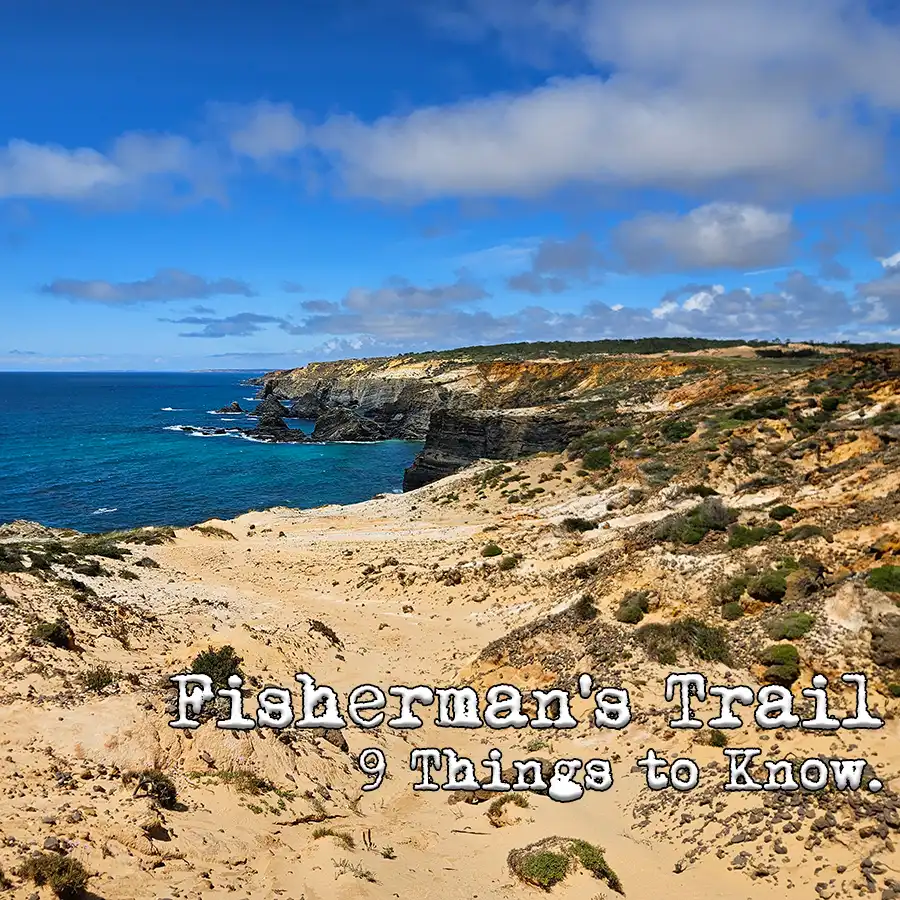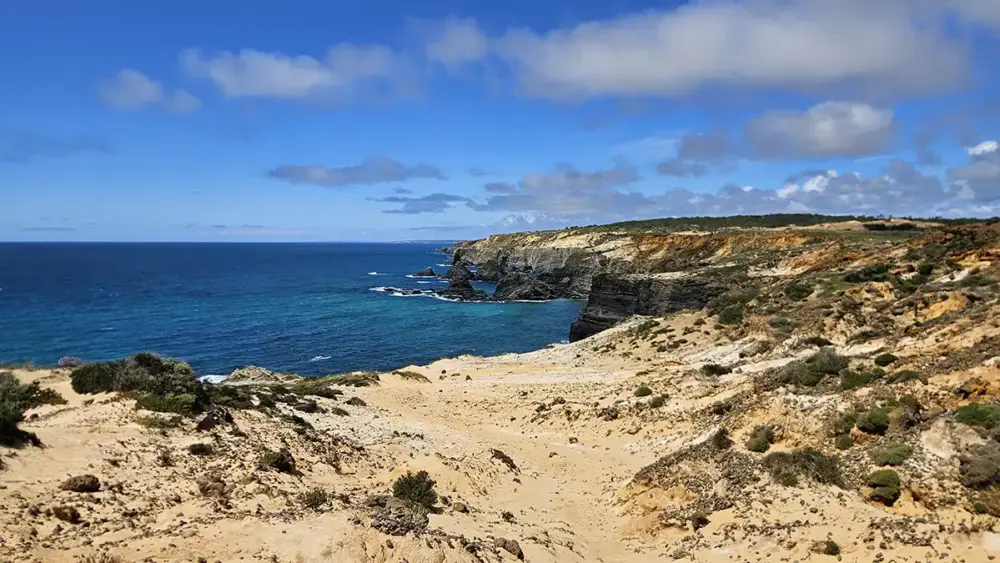
The Fisherman’s Trail (Trilho dos Pescadores) along Portugal’s wild Atlantic coast is brutal, beautiful, and heavily romanticized online. While the views from the cliffs are spectacular, the deep sand underfoot breaks unprepared hikers within the first few kilometers. In 2026, we set out to conquer this route ourselves. If you want to finish the trek without destroying your feet or losing your mind, you need to throw out the generic travel brochures and face the practical realities of the trail.
Here is exactly what you need to know to plan, pack, and have a good experience in Rota Vicentina (Official Website).
1. Avoid the Summer (or Outrun the Heat by Waking Early)
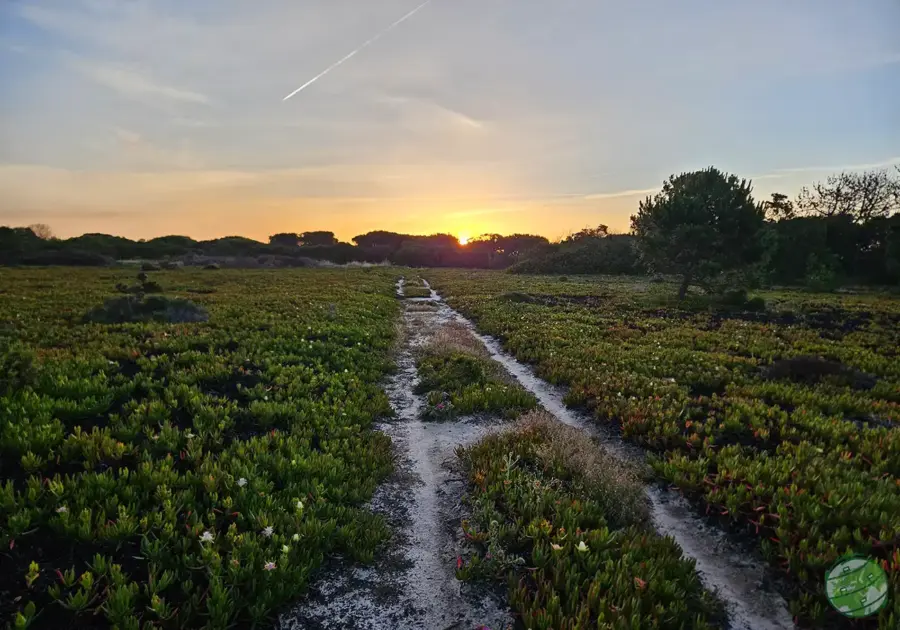
This is the single most important decision of your entire trip. The Fisherman’s Trail should not be tackled between June and September. During these summer months, the heat along the coast is intense, and matching that temperature with kilometers of heavy sand trekking can quickly become dangerous.
If for some reason you do find yourself on the trail during an unexpected heatwave or in the warmer months, you need to adjust your schedule completely. The best strategy is to wake up before dawn, hit the trail right at sunrise, and finish your day’s section during the cooler morning hours. By noon, when the sun is at its peak and the sand begins to scorch, you want to be already arriving at your next destination or resting in the shade.
2. Start in Porto Covo and Skip São Torpes
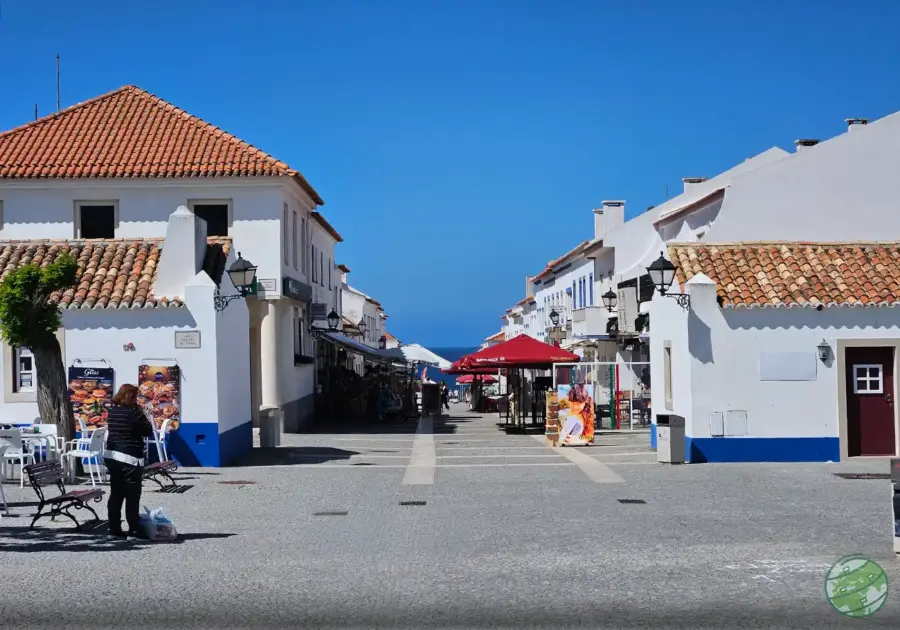
The official starting point of the trail is São Torpes, but most experienced hikers skip the very first section and start directly in Porto Covo.
Porto Covo is highly accessible by public transport (with direct bus connections from Lisbon), beautiful, and filled with amenities. Starting here lets you cut out the logistical fluff and dive straight into the dramatic coastal scenery from your very first step.
3. End Your Journey in Lagos
Forget older guidebooks that claim the trail stops further north or cuts out at Odeceixe. The official, fully integrated Fisherman’s Trail runs over 200 kilometers all the way down to Lagos, in the Algarve.
This complete route lets you experience the full geographical transition from the wild, rugged Alentejo cliffs to the famous golden rock arches of the southern coast. Ending in Lagos also makes your post-hike logistics incredibly seamless, as the city is a major transit hub with direct train and bus connections back to Lisbon or Faro Airport.
4. Break Up the Trail into Separate Trips via Aljezur
You do not have to tackle the entire multi-day trek in one single go to fully experience it. If you have limited time or want to avoid physical burnout, the entire route can be perfectly split into two separate, manageable trips by using Aljezur as your strategic dividing line.
We split the trek into a total of 10 hiking days. First, we did the northern section from Porto Covo to Aljezur in 4 days, which covers the heaviest sand dunes and wild cliff paths of the Alentejo. Later on, we returned to pick up where we left off, hiking from Aljezur to Lagos in 6 days, where the terrain becomes rockier and transitions into the Algarve coast.
Aljezur is the only logical logistical hub for this split. Unlike the smaller intermediate villages, it is a major town with extensive accommodation options, large supermarkets to resupply, and reliable, daily long-distance bus connections (via Rede Expressos) directly back to Lisbon or down to Lagos. This makes pausing or restarting your journey here incredibly seamless.
5. Prepare for the 20km Sand Reality Check
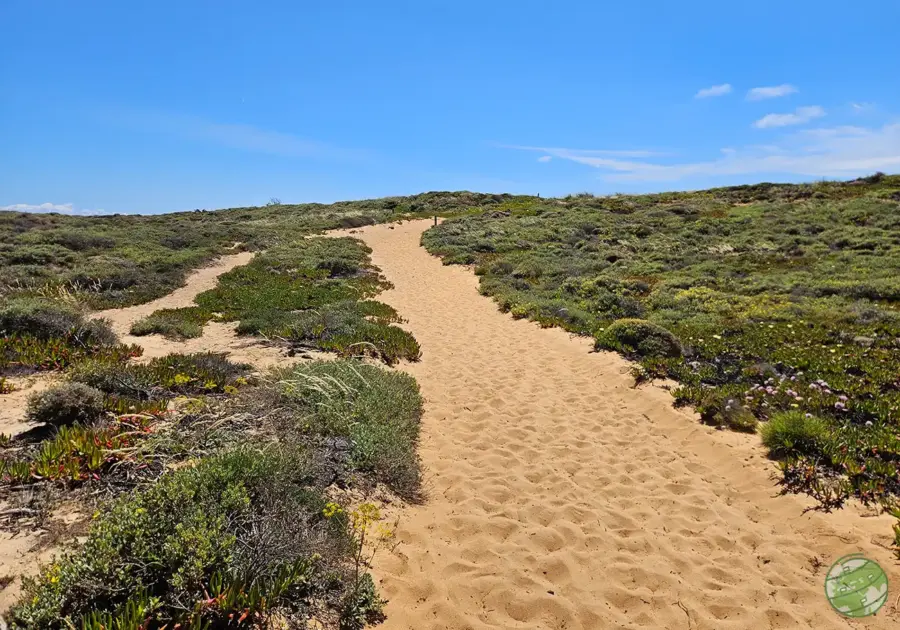
If you look at the map, a 20-kilometer hike looks like a perfectly reasonable day out. But don’t let those numbers trick you.
We had done the Caminho de Santiago Português last year, so we were already well-used to thru-hiking and putting in long days on our feet. Even with that experience, the sand sections on this trail were a lot harder than we ever expected.
The first stage out of Porto Covo is a proper wake-up call. You will be trudging through deep, soft sand dunes for almost the entire day, and walking on that kind of shifting ground takes double the energy of a normal trail. Honestly, a 20km stretch on the Fisherman’s Trail easily feels like walking 30km or more on your legs. Just take it slow and give your muscles some grace on that first day.
6. Gear & Foot Care: Surviving the Dunes
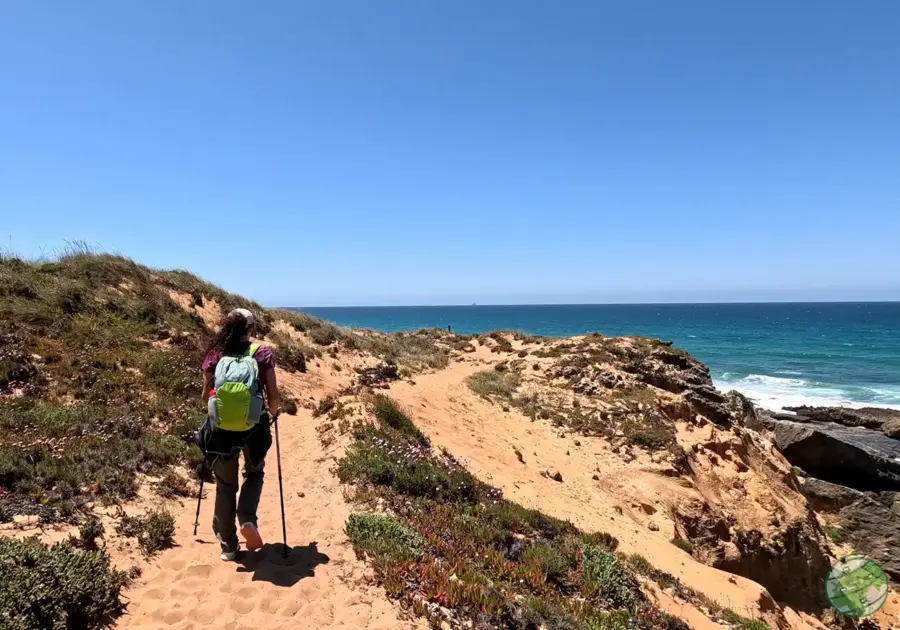
Walking on deep sand forces your feet to move, slide, and shift inside your shoes far more than walking on hard terrain. This constant shifting creates intense friction, moisture, and massive swelling. To protect your feet and legs, your gear strategy needs to be flawless.
:: Upsize Your Footwear
Because of the intense foot movement on the dunes and the heat, your feet will swell significantly more than they would on a normal hike. When choosing your footwear, wear trail running shoes or hiking boots that are at least one full size larger than your regular shoe size. This extra room gives your toes space to expand and prevents your feet from pressing against the sides, drastically reducing the risk of friction-induced blisters.
:: Attack “Hot Spots” and Prevent Blisters
To prevent your feet from breaking down, you need to minimize friction and moisture completely. Pack high-quality, thin synthetic hiking socks that actively wick away sweat and dry fast. Avoid cotton completely, and stay away from heavy materials like wool that will overheat your feet on the hot sand.
Before you even start walking, apply vaseline or an anti-chafing roll-on/stick (the kind runners use) generously over all the friction-prone areas of your feet. Keep the stick handy in your hip belt pocket, and if you feel a hot spot developing during the hike, stop immediately to reapply it.
Make it a strict habit to take regular breaks to remove your shoes and socks, allowing your feet to breathe, dry out, and cool down. A fantastic trick we used was carrying a lightweight, thin ground tarp (lona). This allowed us to sit down comfortably anywhere on the dunes, take off our boots, and rest without getting covered in hot sand.
:: Ditch the Gaiters and Wear Long Trousers
When researching this trail online, you will find a mountain of information recommending sand gaiters (polainas). However, you don’t actually need them if you pack smart.
While gaiters might be necessary if you choose to wear shorts, wearing shorts on this trail is not recommended. Instead, wear long, lightweight, quick-dry travel trousers. Long trousers keep you fully protected from the intense sun, offer a vital shield against ticks in the overgrown vegetation sections, and naturally keep the sand out of your boots. We didn’t bring gaiters at all and had absolutely zero issues with sand getting into our footwear.
:: Use Hiking Poles with Snow Baskets
Do not underestimate the value of a good pair of hiking poles. While there are no massive mountains on this route, poles are essential for stability on the dunes. They take a massive amount of weight off your knees and lower back, saving your legs from early exhaustion during the heavy sand stages.
Beyond the dunes, your poles are also incredibly useful for some of the more technical sections of the trail. As you move along the coastal cliffs, especially on the steeper ups and downs and rocky drops heading into the river valleys and beaches, having that extra balance prevents slips on loose dirt and gravel.
Here is a game-changing hack for the sand dunes: make sure to attach the wide snow or mud baskets to the ends of your poles. Without these plastic tabs, the thin tips of your poles will plunge straight down into the soft sand with every strike, making them completely useless and frustrating to pull back out. The wider baskets create flotation on top of the dunes, giving you actual leverage to push off from.
7. Secure Your Accommodation Weeks in Advance
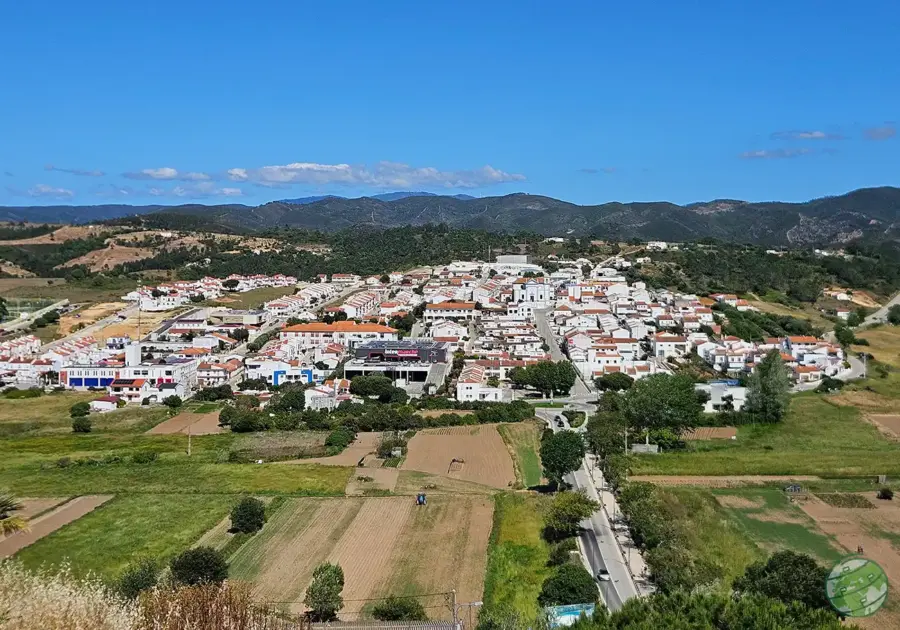
The Rota Vicentina runs through a protected natural park (Parque Natural do Sudoeste Alentejano e Costa Vicentina). Because of this, wild camping is strictly illegal and heavily fined to protect the fragile coastal ecosystem.
The trail connects small villages at the end of every stage, meaning you will rely on local hostels, guesthouses, and B&Bs. Do not leave your booking to the last minute. We had to secure all our accommodations at least 2 weeks in advance to guarantee a bed at the end of each stage. If you try to book any later than that, especially during the peak spring or autumn trekking windows, you risk finding entire villages completely sold out.
8. Sun & Terrain: Managing the Exposure
The Atlantic coast looks paradise-like in photos, but the actual environment offers zero protection from the elements. Managing how you interact with the heat and the path itself dictates your daily comfort.
:: Wear a Bucket Hat to Protect Your Face and Neck
Standard baseball caps won’t cut it here. The sun beats down from above, but the white coastal sand also acts as a massive mirror, reflecting the glare and heat straight up at your jaw and cheekbones.
I wore a round bucket hat with a neck flap and it was vital. Having that 360-degree brim keeps your entire face cast in shadow, protects your ears from burning, and the back flap stops the sun from baking your neck. Combine this with high-factor sunscreen and polarized sunglasses to survive the brutal double-glare.
:: Use Inland Sections as Relief from the Sun
On the pure coastal sections, there is almost no shade whatsoever. You are fully exposed to the elements on top of the bare cliffs. Even in the cooler months of spring, the sun reflecting off the white sand can make the trail feel like an oven.
The good news is that the trail doesn’t stay on the cliff edge forever. Whenever the route turns inland to bypass river mouths, deep valleys, or farmland, you will find some welcome shade from trees and taller vegetation. Use these brief inland segments to cool down, rest, and reapply your sunscreen.
9. Calibrate Your Water Weight Realistically
Because there are zero water sources or shops once you leave a village and head onto a stage, dehydration is a risk, but overpacking water weight will ruin your knees on the sand.
Under normal spring or autumn conditions, carrying 1.5 to 2 liters of water per person is the sweet spot to get you safely to the next town without overloading your backpack. Save the 3-liter heavy haul exclusively for unseasonably hot days or peak summer emergencies when the heatwave turns the dunes into a proper oven.
Final Thoughts
Reading through all of this, the Fisherman’s Trail might sound like a grueling ordeal reserved only for elite adventurers. It really isn’t. The Rota Vicentina is an accessible challenge for anyone with a decent level of fitness and the right mindset, whether you are a regular walker, an older hiker, or tackling your very first multi-day trek. The advice above exists not to scare you off, but to make sure you arrive prepared enough to actually enjoy the scenery instead of spending your days managing avoidable pain.
Get the gear right, book your beds early, and respect the sun. Do that, and what is left is simply one of the most breathtaking stretches of coastline in the world, walked at your own pace, with the Atlantic wind at your back.