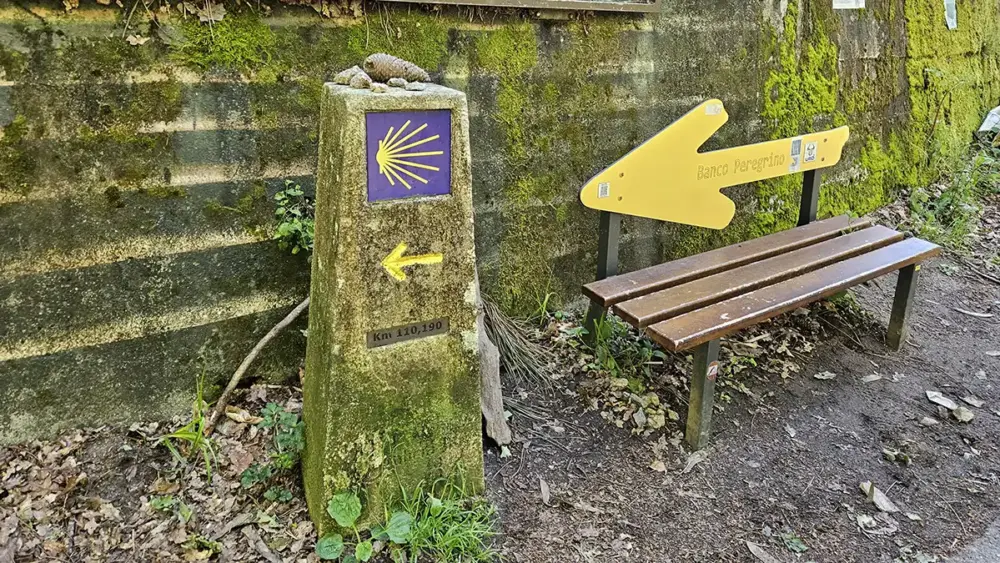
There is a specific moment, just a few kilometers after leaving Porto’s cathedral, where the urban traffic fades and the yellow arrows truly take over. Walking the Camino Português Central in 10 days means averaging around 24km per day. While this route is achievable for most reasonably fit walkers, the pace leaves little room for mistakes. Having completed the journey ourselves, here are 10 practical things we wish we had known before starting.
Planning your route? If you need the exact day-by-day stops, distances, and towns for this timeframe, check out our full day-by-day Camino Portugues Central diary.
Can Anyone Walk the Camino Português Central in 10 Days?
You do not need to be an elite athlete to complete the Portuguese Way from Porto on this timeline. Thousands of everyday travelers of all ages finish the pilgrimage every year. However, walking consecutive 24km days with a backpack puts a unique kind of stress on your joints and muscles that a normal gym session cannot replicate.
The secret to success is physical familiarity, not speed. Dedicating a few weeks to walking long distances on hard pavement before your flight will make your first few days out of Porto much more comfortable. If you understand the daily logistics and look after your body after each stage, a 10-day itinerary is perfectly manageable.
1. The 10-Day Reality: Your Average is 24km a Day

Before you book your flights, look at the math. Completing the Caminho Português Central from Porto to Santiago in 10 days requires serious physical commitment.
Unlike a leisurely 14-day pace where you can take short 15km breaks, a 10-day window leaves zero room for rest days on the trail. You will be putting in long, consistent days on your feet. While many stages are relatively flat, keep in mind that certain days will naturally be longer or feature more elevation gain. Notable sections like the climb up the Labruja mountain after Ponte de Lima, and the steady incline heading towards Rubiães, will require a bit more stamina.
2. Central vs. Coastal Route: Sand vs. Asphalt
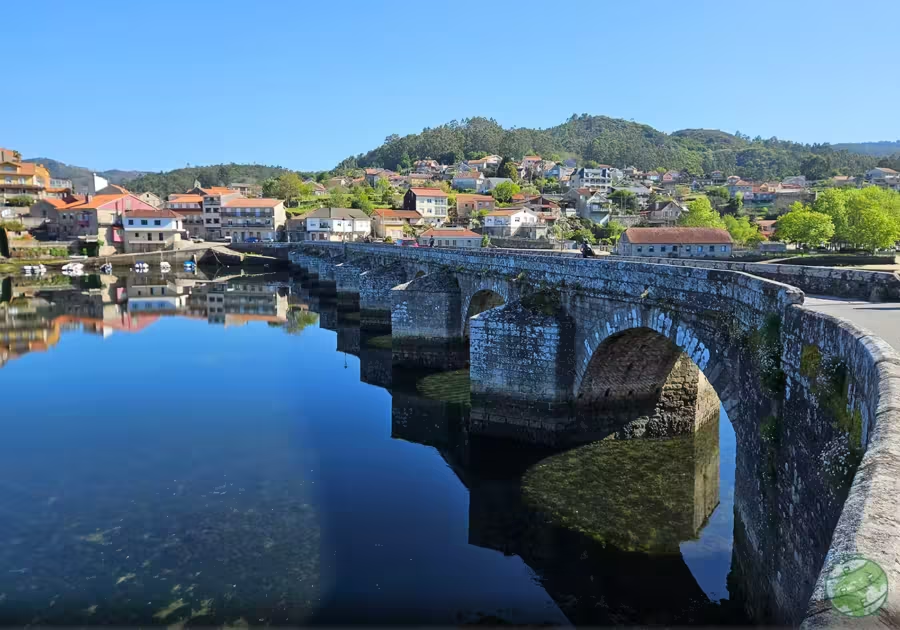
If you are deciding between the two main variations of the Portuguese pilgrimage, keep the terrain underfoot in mind. While the Coastal Route presents the specific adversity of walking on sand and coastal tracks, the Portuguese Central Route features a high percentage of stages on hard asphalt and paved roads.
Walking long distances on these rigid pavement surfaces can be tough on your heels, shins, and knees. Make sure to train your feet on concrete and hard pavement before you leave, and ensure your footwear choice has exceptional cushioning to handle the hard ground.
3. Footwear Choice: Mix Options for Asphalt and Dirt Paths
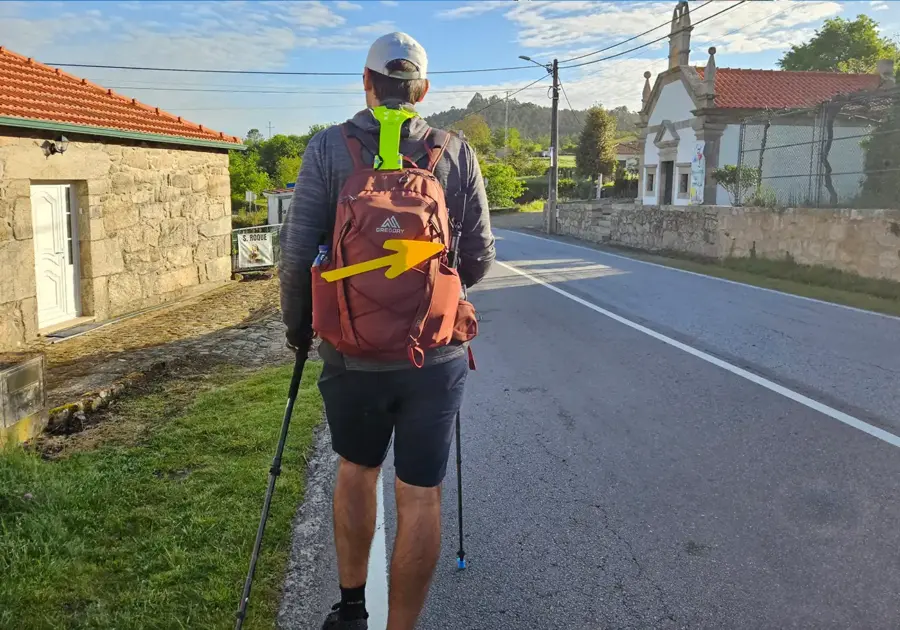
For most pilgrims, heavy leather hiking boots are unnecessary on the Camino Português Central and can easily cause blisters due to the heat and rigid ground. The terrain alternates constantly between long stretches of asphalt and softer dirt paths (terra batida).
You need lightweight footwear that absorbs high impact on the hard roads but still remains comfortable on the dirt trails. I completed the entire route wearing high-quality hiking sandals paired with synthetic socks. Whether you opt for cushioned road-to-trail hybrid running shoes or open hiking sandals, ensure your feet have enough breathing room to expand as they swell over 24km of daily impact on mixed surfaces.
4. Packing Smart: Base Weight, Essential Gear, and Visibility
When you are walking long stages under a strict timeline, every single gram in your backpack multiplies in weight by afternoon. Keep your total pack weight strictly under 10% of your body weight. If it weighs more than 7 to 8kg, start taking things out immediately before you leave home.
You only need two sets of walking clothes (one to wear, one to wash), a lightweight fleece, a reliable rain jacket, basic toiletries, and a compact first-aid kit. Most albergues and guesthouses provide washing facilities, laundry lines, or basins, making extra clothing completely unnecessary. Crucially, your pack must also include a lightweight high-visibility safety vest (colete de visibilidade) or reflective bands for safety when walking on the narrow shoulders of busy national roads during early mornings.
5. Accommodation Planning: Traditional Albergues vs. Booking Ahead

The route has skyrocketed in popularity, which means finding a place to sleep is crucial on a tight timeline. You have plenty of flexibility in how you experience the trail: you can fully immerse yourself in the social, traditional pilgrim experience by staying in public and private albergues (hostels), or you can complete the entire journey staying in private hotel rooms, guesthouses, and residentials (residenciais).
Because a 10-day itinerary leaves no room for error, you cannot afford to risk arriving at a town at 4:00 PM only to find every bed taken. If you prefer total freedom, consider booking only the next one or two nights ahead during peak season to maintain flexibility. If you prefer peace of mind, secure your private stays or private albergue beds in advance so you can focus entirely on walking.
6. Foot Care: Preventing Blisters and Chafing on Long Stages
With 24km stages on the Caminho Português Central, sweat and repeated friction can quickly lead to blisters and hot spots if you do not take preventive measures.
- Ditch the cotton: Never wear cotton socks. Cotton absorbs moisture, holds onto sweat, and creates a damp environment that significantly increases the risk of blisters. Use high-quality synthetic socks or light merino wool that wick moisture instantly.
- Lubricate early: Before you put your socks on in the morning, coat your entire foot in vaseline or a runner’s anti-chafing stick. Reapply it on your heel and toes halfway through the day.
- One simple rule we followed: Never wait until the end or even the middle of the day to check on your feet. Make it a habit to take your shoes and your socks completely off during every single break you take along the way. Letting your feet air out, dry in the sun, and cool down for 10 to 15 minutes stops hot spots from turning into painful blisters. Never push through a burning sensation.
7. Bypassing Porto’s Urban Outskirts: An Option for Tighter Timelines
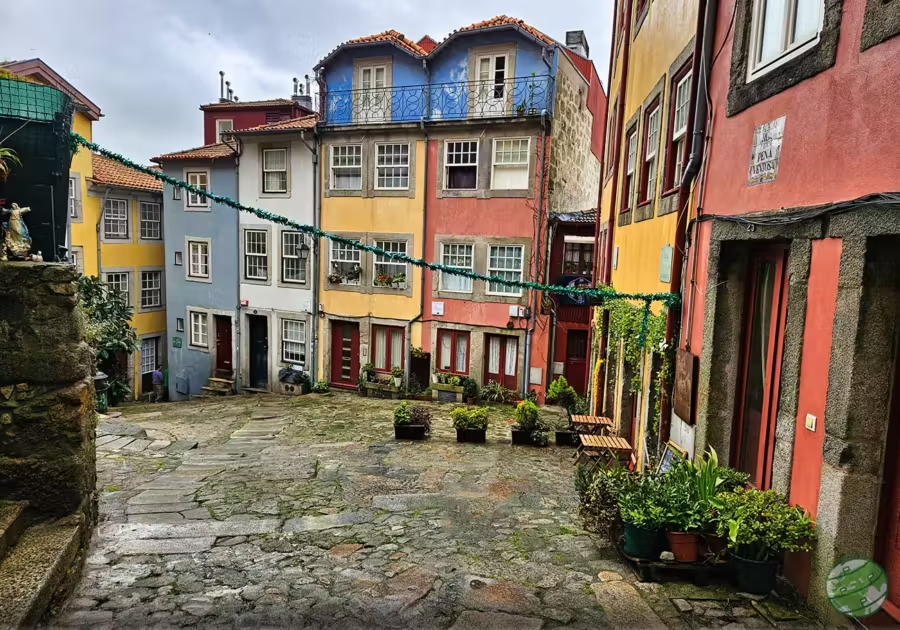
Walking out of a major city can be tough on your feet and empty your energy reserves before you even reach the countryside. We actually chose to walk every single kilometer from the starting point and didn’t regret it at all; we absolutely loved walking through the historic old town and navigating our way through the varying urban suburbs, feeling it was all part of the complete experience.
However, many pilgrims choose to skip this initial stretch. If you are on a strict 10-day limit or want to protect your joints from early fatigue, taking the metro or a local bus to Vilar do Pinheiro or Vila do Conde is a very popular alternative. Skipping those industrial and suburban sections allows you to save your energy and drop straight into the scenic, rural Minho landscape where the natural walking trails truly begin.
8. Choose the Scenic Forks: Take the Detours to Avoid Heavy Roads
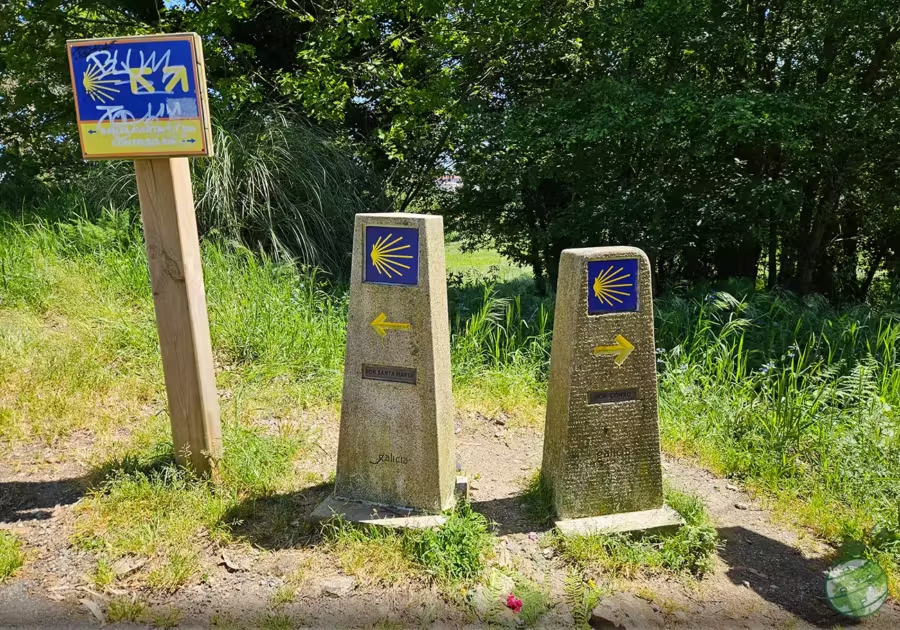
As you follow the yellow arrows, you will frequently encounter places where the path splits into two different directions. One option usually takes the shortest, most direct route along or near busy national roads, while the other is a complementary bypass or scenic variant.
We highly recommend taking the forks that detour away from the roads, even if they add extra kilometers to your day. Walking along tight asphalt shoulders with heavy truck traffic is stressful. Taking the green variants will cost you some extra steps, but trading roaring engines for quiet forest tracks, old stone bridges, and rural backroads is always worth the additional distance.
9. Fueling the Walk: Water Points and Pilgrim Menus

Eating well and staying hydrated are the most important parts of the recovery process on the Portuguese Way from Porto. For water, always carry at least 1.5 liters with you, especially during the warmer summer months. While there are many historic stone fountains and cafés along the route, the distances between public water points can be surprisingly long in rural sections, so top up your bottles whenever you stop.
When it comes to food, keep an eye out for places offering the traditional Menu do Peregrino (Pilgrim Menu), which is usually one of the best-value meals available on the route. Typically costing around €10 to €15 at the time of writing, these fixed-price meals are an outstanding way to save money while eating hearty, regional food. They generally include bread, soup, a substantial main course (often fresh fish, pork, or beef with rice and potatoes), a dessert, and coffee, alongside a drink—which frequently includes a jug of local wine.
10. The Border Transition: Losing an Hour to Spain
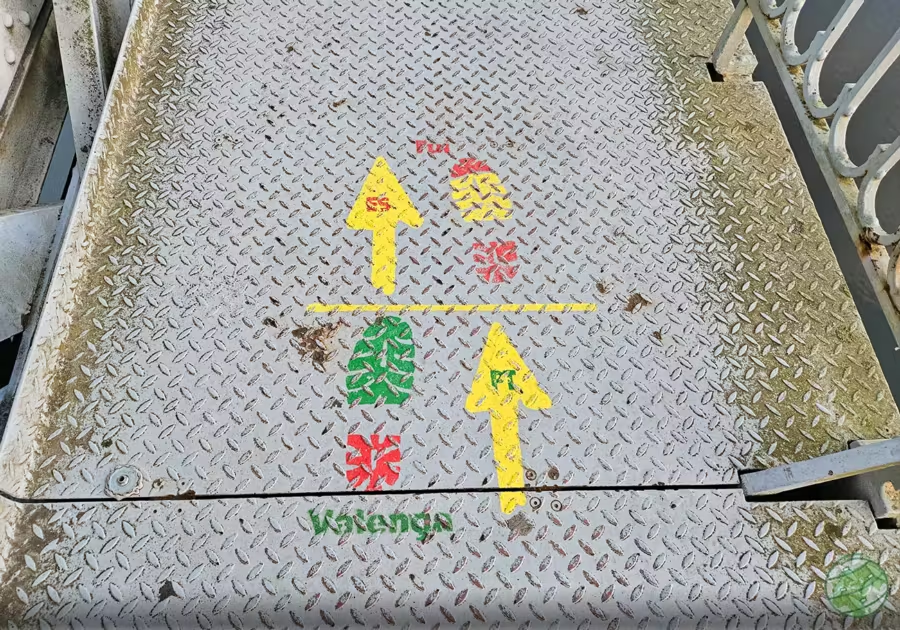
When you cross the international bridge from Valença (Portugal) to Tui (Spain) at your absolute halfway point on the Portuguese Central Route, you are not just crossing a river; you are changing time zones.
Time Zone Alert: Spain is one hour ahead of Portugal. When budgeting your daylight hours for that specific stage, remember that you instantly lose 60 minutes the second you step into Galicia. Start your day an hour earlier than usual to ensure you don’t find yourself walking into your Spanish destination in the dark or arriving too late for local lunch schedules.
Final Thoughts
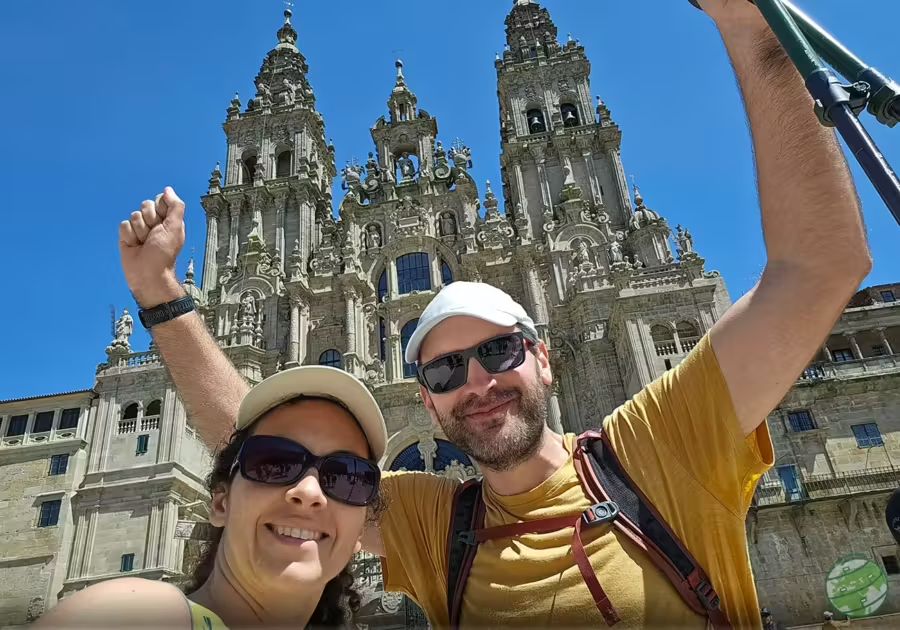
The Camino Português Central provides you with unparalleled experiences, from the peaceful woodlands of northern Portugal to the cold glasses of Vinho Verde after a long day on the trail. By understanding the physical demands of this 10-day pace and adapting your approach to the regular road sections, you ensure that your focus stays exactly where it belongs: on the local culture, the stunning scenery, and the unique rhythm of the trail.
Ten days after leaving Porto Cathedral, you will walk beneath the arches of Santiago de Compostela’s old town and step into Obradoiro Square. The journey is demanding, but with realistic expectations and good preparation, it is an experience you will remember long after the final stamp is added to your pilgrim passport. Respect your pace, trust your training, and Buen Camino!
Ready to map out your daily stops? Now that you know what to expect on the trail, head over to our comprehensive day-by-day Camino Portugues Central walk to start planning your specific overnight locations.